The 15 Stages Where Something Can Go Wrong (And Where Most Operations Are Exposed)
Most food manufacturers think about production risk in terms of the big moments. The equipment failure. The supplier that ships the wrong ingredient.
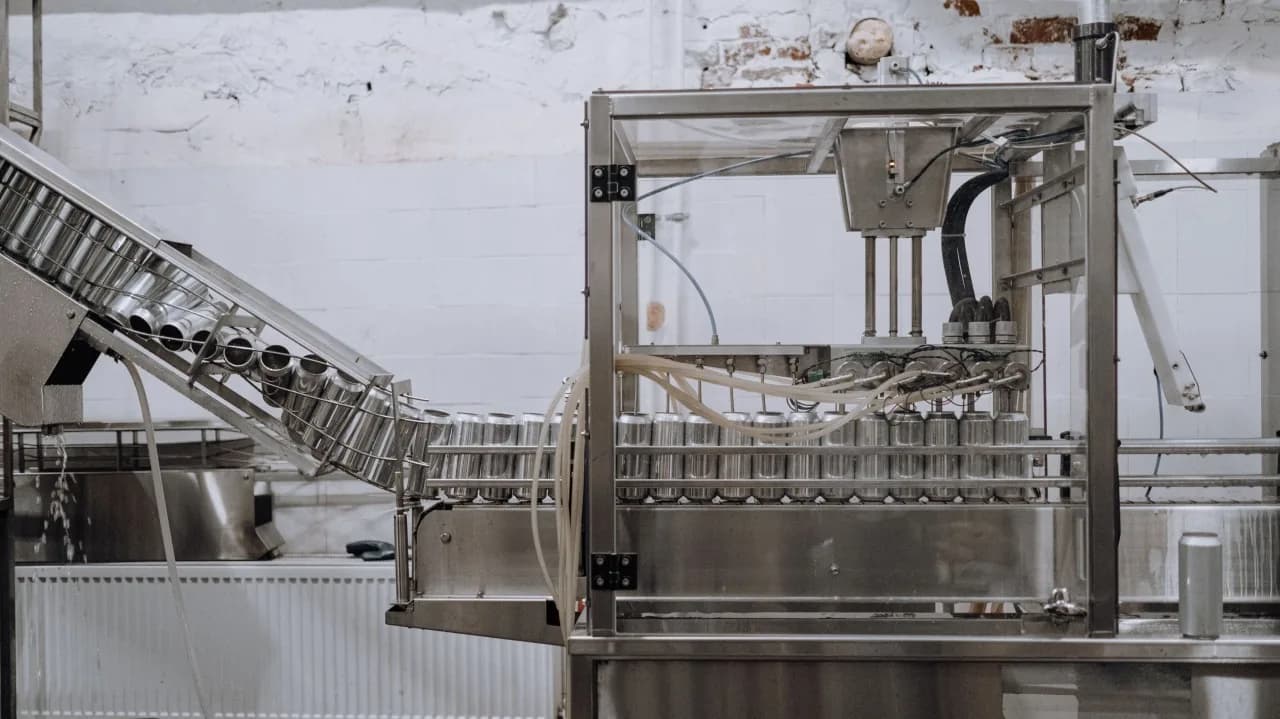
Most food manufacturers think about production risk in terms of the big moments.
The equipment failure. The supplier that ships the wrong ingredient. The recall that surfaces a traceability gap. The audit finding that nobody saw coming.
Those events are real and they're worth planning for. But they're not where most production risk actually lives day to day.
The risk that runs continuously, across every shift in every plant, is smaller and quieter than that. It lives in the gaps between stages. In the step that depends on a specific person remembering a specific thing under time pressure. In the form that gets filled in later, from memory, after the shift has moved on. In the process that works fine when everything is normal and fails predictably when it isn't.
Walk through a production run from the beginning and the exposure becomes visible in a way that's hard to unsee.
Stage 1: Raw ingredient receiving
The first risk in any production run shows up before anything gets made.
Right supplier. Right quantities. Right temperature at the point of receipt. QC check completed and documented. Approval recorded before the ingredient moves into storage.
Each of those is a yes or no question. Each one depends on the right person being in the right place at the right time with the right information and the right form. In operations managing receiving manually, the documentation of this stage is only as reliable as the conditions under which it was completed.
A delivery that arrives during a busy period. A receiving team that's short-staffed. A QC check that gets done but documented later. None of these are unusual. All of them introduce a gap between what happened and what the record says happened.
And because receiving is the first stage, any gap here carries forward through every subsequent stage the ingredient touches.
Stage 2: Ingredient storage
Right location. Right conditions. FIFO actually being enforced rather than nominally maintained.
FIFO is one of those processes that almost every food manufacturer has a policy for and almost every food manufacturer struggles to enforce consistently. The policy says oldest stock ships first. The reality is that new stock gets put in the most accessible location because the floor is busy and reorganising the rack takes time nobody has.
The result is a slow drift between the intended rotation and the actual one. Older lots stay in place longer than they should. Expiry windows get closer without triggering action because the lot isn't visible enough to flag.
This isn't a discipline problem. It's a visibility problem. When FIFO enforcement depends entirely on the floor team's awareness of lot age and location without any system support, it works when the team is on top of it and drifts when they're not.
Stage 3: Weighing and measuring
Right amount. Correct scale. Verified by whom, and when, and with what documentation.
Weight accuracy in food manufacturing isn't just a quality issue. It's a cost issue, a compliance issue, and in formulated products, a food safety issue. A gram variance on a single batch is a rounding error. The same variance running across a hundred batches a week is a yield problem, a cost problem, and potentially a label claim problem if the finished product weight is affected.
Manual weight capture introduces two risks. The first is the measurement itself, which is only as accurate as the scale it was taken on and the conditions under which it was read. The second is the record, which is only as accurate as the person who wrote it down and entered it into the system.
When those two steps are separated by any amount of time, even minutes, the record is a recollection rather than a measurement.
Stage 4: Recipe version control
This one doesn't get enough attention.
Most food manufacturers have multiple versions of most recipes. Formulation adjustments. Ingredient substitutions approved by QA. Seasonal variations. Regional spec differences for different customers.
The question isn't whether the right version exists in the system. It's whether the floor team is running the right version on any given production run. In operations where recipe management is manual or where the current version isn't clearly flagged at the point of use, running an outdated formula is a genuine operational risk.
It happens. Particularly when a new employee is running a line they're less familiar with. Particularly when the version change was recent enough that the old one is still in circulation. Particularly when the pressure to start the run is higher than the pressure to verify the version first.
"We had a batch run on a formulation that had been superseded three months earlier. Nobody flagged it because the old version was still in the system and the operator pulled up the first result. The finished product was fine but we had to investigate the whole run. That took two days."
Stages 5 through 15
Staging. Line setup and verification. Production run itself. In-process quality checks. Packaging. Labelling. Finished goods intake and inspection. Hold and release decisions. Traceability linkage. Sanitation and changeover. Documentation close-out.
Each one of these stages has its own set of things that can go wrong. Each one depends on the right person doing the right thing at the right time with the right information. Each one is a place where a gap between the official process and what actually happened can open and go undetected until it surfaces downstream in a way that's more expensive to address.
The cumulative picture across all 15 stages is an operation with significant surface area for error, running continuously, across every shift.
"When we mapped our process end to end and identified every manual step, we counted 47 distinct human actions required to complete a production run from receiving to shipment. Each one was a potential failure point."
47 distinct human actions. Each one a potential failure point. That's not an unusually complex operation. That's a fairly typical mid-sized food manufacturer managing a production run the way most mid-sized food manufacturers manage it.
Where most operations are actually exposed
The honest answer to "which stages are covered in your current system" is usually: some of them, most of the time.
The receiving documentation is mostly complete. The FIFO enforcement mostly works when the team is fully staffed. The weight capture is accurate when the person doing it has time to do it carefully. The recipe version is usually right because the person running the line has run it enough times to know which one to use.
Most of the time. Usually. When the team is fully staffed. When the person doing it has time.
Those qualifiers are doing a lot of work. And what they're describing is an operation whose documentation reliability is directly correlated with how good the day is going. On a good day, with a full team and no surprises, most of the 15 stages are covered adequately. On the other kind of day, the gaps multiply.
The problem is that the other kind of day is the most common kind of day in food manufacturing. Short-staffed. Mid-changeover. Two things happening at once. The floor moving faster than the documentation can keep up.
That's not an exceptional operating condition. That's Tuesday.
What it looks like when all 15 stages are covered
The goal isn't to add more documentation burden to an already stretched floor team. It's to build a system where documentation happens automatically as a byproduct of the work itself.
When ingredient receiving is captured through a scan at intake, the record exists the moment the product enters the facility. When FIFO enforcement is supported by a system that shows lot age and location in real time, the floor team enforces it because the information is there rather than despite not having it. When weight capture flows directly from the scale to the production record, the measurement and the documentation happen simultaneously. When recipe version is locked to the production order, the operator can't run the wrong formula.
Each stage that gets automated in this way removes a human failure point from the chain. Not because the people were failing, but because the system stopped asking them to hold information in their heads that a system could hold more reliably.
The result is a production run where every stage is documented because the system documented it, not because someone remembered to. Every entry timestamped. Every step linked to the lot, the batch, the production order. Every gap that used to exist quietly between the official process and what actually happened, closed.
"The first full production run we tracked end to end, I went back through the record afterward and every stage was there. Receiving, storage, weigh-up, recipe version, in-process checks, packaging, shipment. I'd never seen a complete record before. Not because we were doing anything wrong. Because we'd never had a system that captured all of it."
The question worth sitting with
Go through the 15 stages. Not the theoretical version. The version that runs in your plant on a normal day.
For each one, ask: if something went wrong at this stage right now, would we know? How quickly? From what record?
The stages where the answer is uncertain are the ones worth focusing on. Not because something has gone wrong there. Because those are the stages where something going wrong would be invisible until it wasn't.
Ready to see what a fully covered production run looks like?
Book a demo at book a demo. We'll walk through your specific production process and show you exactly which stages Tracktile covers automatically from day one.
Related Articles
The ABCs of ERP, MRP and MES in Manufacturing
Dive into the roles of ERP, MRP, and MES in food and beverage manufacturing. Unravel their distinct functions and the power of integration for optimal operations.
Embracing Technology for Orders and Shipments
Discover why automation and technology transform food and beverage manufacturing with efficient orders and shipping.
Embrace the future of technology in food manufacturing. Don't get left behind!
Explore how technology boosts efficiency, safety, and data-driven decisions in food manufacturing. Don't get left behind; embrace the digital transformation.
Ready to modernize your manufacturing?
See how Tracktile can streamline your operations with a personalized demo.
Book a demo