What's in Your Cold Room Right Now?
It's a simple question. Not what should be there according to the system. Not what was there at the end of last shift.
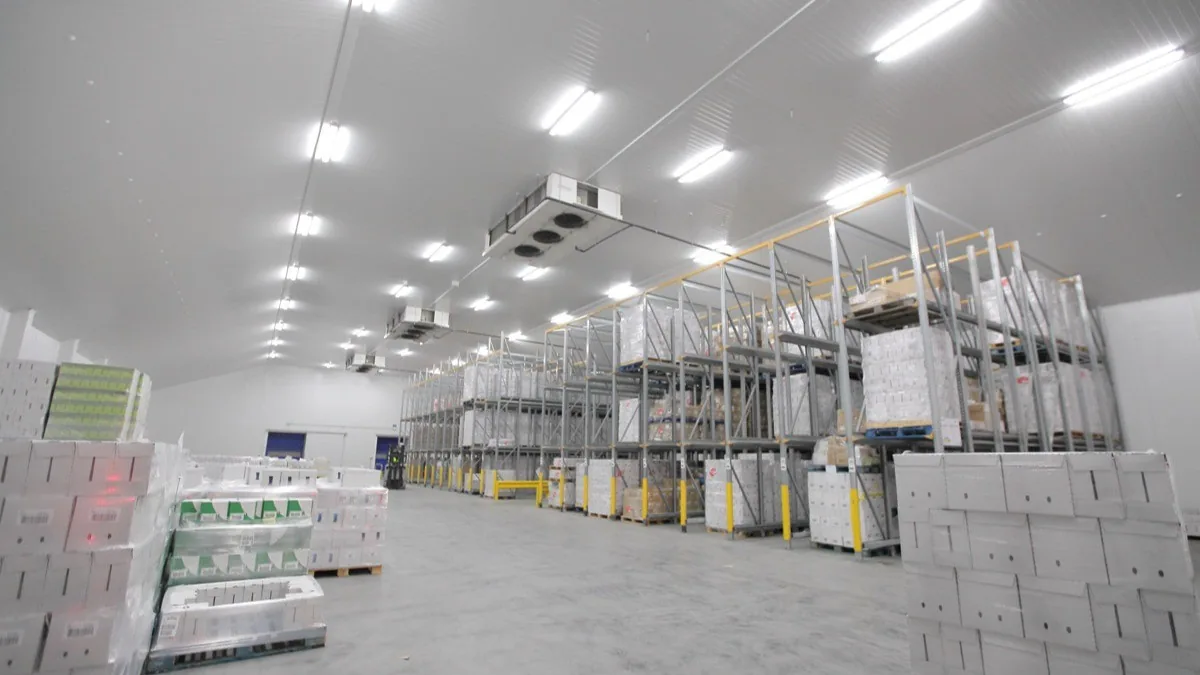
It's a simple question.
Not what should be there according to the system. Not what was there at the end of last shift. What is actually in your cold room, right now, by lot, by location, by weight.
Most meat processors can give you a reasonable answer. The experienced ones can give you a pretty good one from memory. But a precise answer, one that doesn't require a walkthrough, a physical count, or a conversation with whoever did the last transfer, that's harder to come by than it should be.
And in a meat processing environment, the gap between a reasonable answer and a precise one is where a significant amount of money disappears.
How product gets lost without going anywhere
Cold room inventory problems in meat processing rarely look dramatic. Product doesn't vanish. It just becomes unaccounted for, in ways that accumulate over time.
A transfer happens during shift change. The paperwork follows later, after the next task, after the break, after the end of the shift. By the time the record gets updated, the person who did the transfer is gone and the details are slightly off. The lot number is close but not exact. The weight is estimated. The destination is logged as the general cold room rather than the specific rack position.
Multiply that across a week of operations on a busy floor and the inventory record has drifted from physical reality in a dozen small ways. No single error is catastrophic. But the combined effect is a cold room that the system can't fully account for.
Then comes the investigation. Someone notices the discrepancy. A supervisor gets asked to explain it. Records get pulled. Transfers get reconstructed from memory and from whatever paper trail exists. The exercise takes hours, sometimes days, and at the end of it the answer is usually approximate rather than definitive.
"We knew the product was somewhere in the facility. We just couldn't tell you exactly where without physically checking every rack in every cold room. That took half a day every time it happened."
Half a day. In a facility running multiple shifts, managing multiple species, shipping to multiple customers with different lot requirements. That's not an acceptable answer.
The cut-level problem
What makes cold room inventory particularly complex in meat processing is that you're not managing units. You're managing cuts.
A single carcass becomes primals. Primals become sub-primals. Sub-primals become retail cuts, ground product, trim, each with its own weight, its own lot identity, its own customer destination, and its own shelf window. The number of individual inventory items generated from a single animal is significant. The number generated across a full kill is enormous.
Tracking all of that manually, through the kill floor, the cooler, the fabrication room, and the packaging line, with accurate lot identity and weight at every step, is an enormous administrative burden. And it's one that most operations are managing with a combination of paper-based systems, end-of-shift data entry, and the institutional knowledge of experienced supervisors who know intuitively where things usually end up.
That works, up to a point.
But institutional knowledge retires. Paper-based systems have gaps. End-of-shift data entry reflects what someone remembered, not necessarily what happened. And the cumulative effect of those imprecisions is a fabrication and cold storage environment where the true state of inventory is always slightly uncertain.
"On paper we had the product. On the floor it was a different story. The lot we thought was in cooler B was actually split across three locations, relabelled at some point, and partially shipped against a different order. Nobody did anything wrong. It just happened."
Nobody did anything wrong. It just happened. That sentence captures the cold room problem in meat processing better than any operational analysis could.
What it costs
The direct costs are measurable. Write-offs from product that aged past its window because it was mislocated and not prioritised for shipping. Rush orders to cover commitments against inventory that was thought to be available but couldn't be confirmed in time. Labour hours spent on physical counts and investigation exercises that should have been unnecessary.
The indirect costs are harder to quantify but at least as significant.
Customer commitments made against inventory positions that weren't accurate. Lot-level traceability requests from retail buyers that take hours to fulfil rather than minutes. CFIA inspections where the lot history documentation doesn't cleanly match the physical inventory record. These aren't compliance failures in the traditional sense. They're credibility gaps. And in a sector where customer relationships and regulatory standing are both built on demonstrated reliability, credibility gaps have consequences.
One plant we work with estimated they were writing off between two and three percent of weekly revenue in cold room related losses before they moved to real-time lot tracking. Not from any single dramatic event. From the accumulated cost of operating with inventory uncertainty as a permanent background condition.
Two to three percent, every week. For years.
What changes with cut-level tracking
The difference real-time cut-level tracking makes in a cold room environment isn't complicated. It's just precise.
Every carcass that enters the facility gets a lot identity. Every cut that comes off the fabrication line is weighed and scanned, tying its weight and identity back to the source lot automatically. Every transfer between locations is recorded at the point of movement, not reconstructed afterward. Every cold room location is live, accurate, and visible from one screen.
When someone asks what's in cold room B right now, the answer is there before they finish asking. When a lot needs to be located for a customer shipment or a compliance request, it takes seconds. When yield drifts on a specific line, the data trail to find the source is already built.
Product doesn't get lost. Not because people are more careful. Because the system knows where everything is at every moment.
"The first month we were live, we did a physical count to verify the system. It matched. That had never happened before. We did another one two months later. It matched again. That's when we stopped doing manual counts."
That's not a technology story. That's an operations story. The technology just made it possible.
The question worth asking
What would it mean for your operation if cold room uncertainty wasn't a permanent background condition?
Not just the write-offs and the labour hours. The customer commitments made with confidence. The compliance requests answered in minutes. The yield investigations resolved within the shift they started. The physical counts that stop being necessary because the system is already right.
The cold room problem in meat processing is old. The tools to solve it are not.
Ready to see what your cold room looks like when every lot is exactly where the system says it is?
Book a demo at book a demo. Show us your operation and we'll show you exactly what cut-level tracking looks like running live in a meat processing facility.
Related Articles

The Important Levels of Record-Keeping in Food Manufacturing
Unlock success in food manufacturing with optimal record-keeping in inventory, quality control, production, and packaging for safety, quality, and efficiency
Strategies for managing raw materials, ingredients and packaging
Discover key strategies for managing raw materials, ingredients & packaging. Harness the power of automation for optimized inventory in food manufacturing.
Unique Challenges in Food Manufacturing, can Automation Help?
Explore how automation enhances food manufacturing, optimizing inventory, boosting quality control, increasing production, and improving packaging.
Ready to modernize your manufacturing?
See how Tracktile can streamline your operations with a personalized demo.
Book a Demo