If you can't reconcile the quantities, you can't defend the lot
An Alberta prepared meals manufacturer I've spent time with runs a full physical count on the last Saturday of every month.
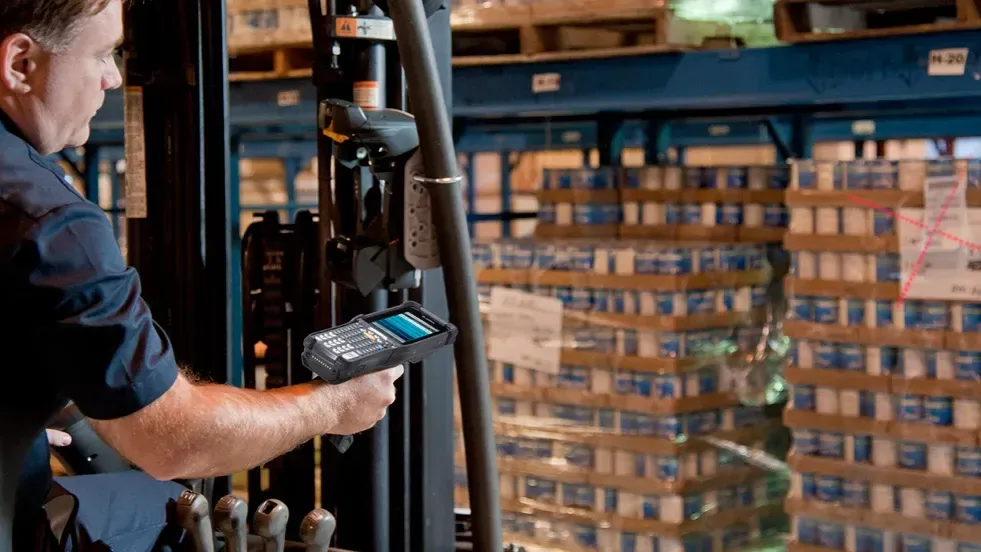
An Alberta prepared meals manufacturer I've spent time with runs a full physical count on the last Saturday of every month. Twelve people, most of a day, pizza at lunch. They've done it that way since the founder's father ran the place, and there's a certain pride in it. The number that comes out of that Saturday is the number the business runs on.
The controller told me something interesting about it. By the time the count is reconciled and entered, usually the following Wednesday, it's already describing a building that doesn't exist anymore. Four days of production, receiving and shipping have happened on top of it. She knows this. Everybody knows this. The count still gets treated as the source of truth for the rest of the month because it's the only figure anyone ever verified.
That's a costly ritual, but it's not the part that would worry me if I ran that plant.
What would worry me is that the same gaps causing the count to be necessary are sitting underneath the lot records, and nobody's looked at it from that direction.
Quantity and identity are the same record
Think about what a traceability record actually claims. It says a specific amount of a specific lot went into a specific batch, and that batch became a specific number of finished cases that went to specific customers.
Every one of those is a quantity statement. Trace a batch backwards and you're not just asking which supplier lot was used, you're asking how much of it, because the answer determines whether the rest of that lot went somewhere else you also need to look at.
So when the month-end count comes up short on an ingredient by a meaningful margin, that discrepancy has to have gone somewhere. It went into production and wasn't recorded. It was scrapped and nobody logged it. It was received as one thing and consumed as another. Each of those possibilities means a lot record somewhere is describing something that didn't happen the way it's written down.
Nobody connects the two because they're owned by different people. The count belongs to finance. The lot records belong to QA. They reconcile against different things, they live in different files, and the only time they're ever compared is the one week you desperately need them to agree.
"Our count was out by about four percent most months and we called that good. Never occurred to me that four percent was also floating around in the batch sheets."
The recall math nobody explains at the trade show
Under the Safe Food for Canadians Regulations, a licence holder needs to be able to trace one step back to the immediate supplier and one step forward to the immediate customer, with records available to CFIA on request. Most operators know that. What gets discussed less is what happens to the scope of a recall when the records are directionally right but not precise.
Here's the mechanic. When you initiate a recall, you're drawing a boundary around affected product. Everything inside the boundary comes back. The boundary is set by what you can demonstrate, not by what you believe.
If your records show that supplier lot 4471 was received on the eighth and consumed across two production runs, and you can prove which runs and which output lots resulted, your recall is those two runs. If your records show that lot 4471 was received on the eighth, and consumption was booked against a general ingredient code sometime that fortnight, your recall is the fortnight.
The difference between those two positions is not a compliance technicality. It's the difference between pulling back a day of production and pulling back ten, plus every customer conversation attached to the wider number, plus the credibility cost with a retailer who now knows you couldn't be specific.
And it's worth saying that the second operation isn't doing anything illegal. They're keeping records. The records just aren't granular enough to draw a tight line, and that only becomes apparent on the worst day.
For anyone shipping into the States, FSMA 204 makes the same point in a more explicit way. If a product sits on the Food Traceability List, you're expected to capture defined key data elements at each critical tracking event and produce them as an electronic sortable file within 24 hours. The compliance date has shifted, but the design intent is fixed. Regulators want to narrow recall scope, and they want to do it using your records.
"The auditor didn't ask if our numbers were right. He asked how we'd know if they weren't."
Why manual reconciliation makes this worse, not better
You'd think a monthly count would catch drift before it becomes a problem. It catches the total. It almost never catches the cause.
A count tells you that you're short forty kilos of an ingredient. It doesn't tell you whether that happened over four weeks or in one bad afternoon, which production run absorbed it, or whether it left the building at all. So the correction gets booked as an adjustment, the books balance again, and the underlying record stays wrong in whatever specific place it was wrong.
Next month the same thing happens, gets adjusted again, and the operation develops a tolerance for a gap it has stopped investigating. Not through negligence. Through the entirely reasonable logic that chasing forty kilos across four weeks of paperwork costs more than forty kilos is worth.
That logic holds right up until the day the gap isn't about value anymore and is about scope.
What changes when consumption is recorded where it happens
The fix isn't more counting. It's that the consumption event and the record of it stop being two different activities separated by hours and a piece of paper.
When somebody scans a lot as it goes into a batch, the deduction happens at that moment, against that specific lot, attached to that specific run. There's no interpretation step afterward where an office figures out what probably got used. The quantity and the identity are captured in the same action because they were never actually separate facts.
That's what makes it possible to close an audit in under an hour instead of blocking out two days, and it's also what lets a mock recall return a real boundary rather than a cautious one. The proof accumulated while people were doing their jobs.
The prepared meals plant I mentioned still does its Saturday count, by the way. They've kept it as a verification rather than a discovery exercise, and it takes about two hours now instead of a day, because the number it's checking against is already close. The founder's father would probably approve of that. Same ritual, much less anxiety attached to it.
"We stopped finding surprises. That sounds boring and it's the best thing that's happened to my month end."
So what would your boundary look like?
Here's a question I'd ask any operator reading this. If a supplier called tomorrow about a raw material issue on a lot you received six weeks ago, how many finished cases would you have to pull back?
Not how many were affected. How many you'd be unable to rule out.
If those two numbers are close together, your records are doing their job. If the second is several times the first, you've got an exposure that has nothing to do with food safety practice and everything to do with how consumption gets written down.
Book a demo at book a demo. Thirty minutes, and bring a lot number from something you made in the last two months. We'll walk it forward and back the way a recall would, and you'll see exactly where your current boundary sits. If it's tighter than you expected, that's genuinely good news and you've lost half an hour finding out.
Related Articles
What a Recall Actually Tests (It's Not What Most People Think)
Most food manufacturers think about recalls in terms of product. Which lot is affected. How much is out there. How quickly it can come off shelves.

The Moment Your System Gets Tested
At some point, every food plant gets tested. Not during a smooth production run. Not when everything is on schedule.

The Question That Decides Whether You Get the Shelf Space
The producer makes marinades and finishing sauces out of a 22,000 square foot facility west of Hamilton.
Ready to modernize your manufacturing?
See how Tracktile can streamline your operations with a personalized demo.
Book a demo