What a Recall Actually Tests (It's Not What Most People Think)
Most food manufacturers think about recalls in terms of product. Which lot is affected. How much is out there. How quickly it can come off shelves.
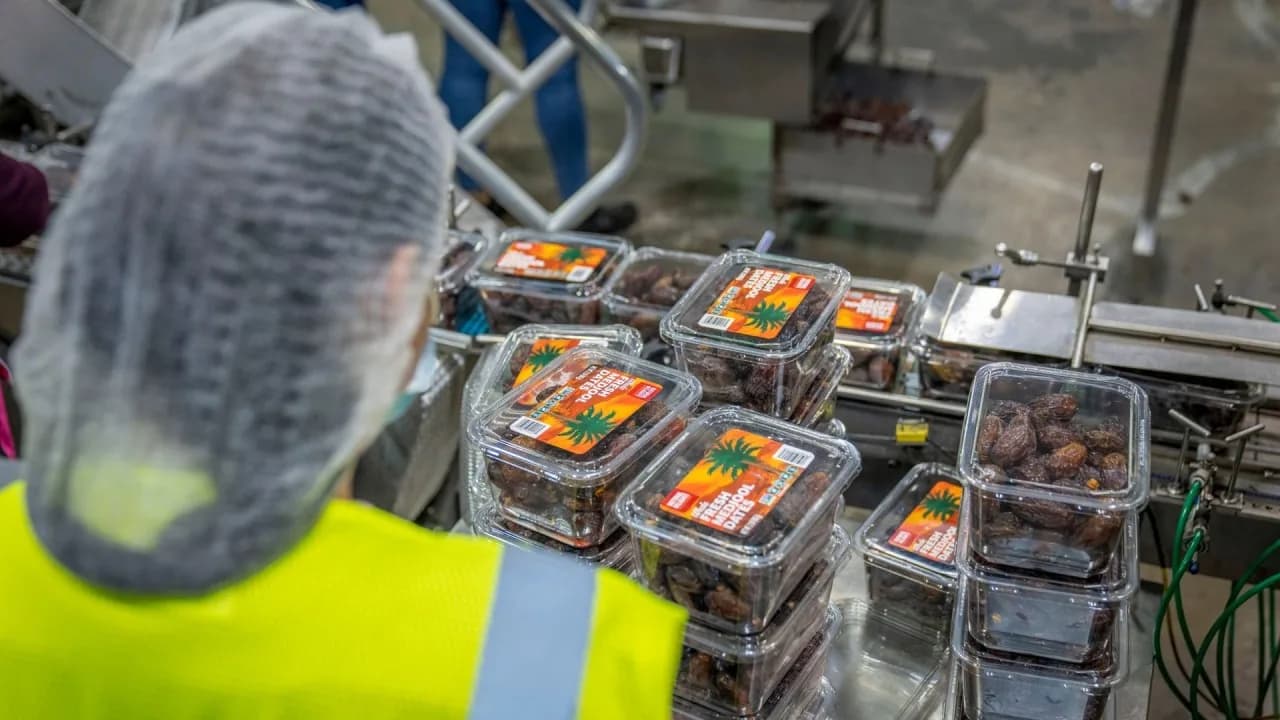
Most food manufacturers think about recalls in terms of product.
Which lot is affected. How much is out there. How quickly it can come off shelves. These are the right questions. But they're the second set of questions. The first set is different, and it's the one that determines whether the second set gets answered in time to matter.
Where did the product go? Who has it right now? How far back does the affected ingredient trace? Which other batches touched the same source?
Those questions don't get answered by looking at the product. They get answered by looking at the records. And the speed at which a food manufacturer can answer them is almost entirely determined by decisions made long before any recall scenario exists.
The FDA's recent findings made this visible in a way that's hard to ignore. Over 5,000 retail checks after a recall. Recalled product still on shelves in more than 150 locations. The recall had already been issued. The problem wasn't the speed of the notification. It was the accuracy and completeness of the distribution records behind it.
Understanding why that happens, and how to prevent it, requires understanding what traceability actually means in practice.
Forward and backward: the two directions every trace has to run
Traceability in food manufacturing operates in two directions simultaneously, and a complete system has to handle both.
Backward traceability means being able to take a finished product and trace it back through every production step to the raw ingredient sources. Which supplier lot of which ingredient went into which production batch. Which production batch went into which finished product run. This is the direction a quality investigation runs. Something is wrong with a finished product and you need to find the source.
Forward traceability means being able to take a raw ingredient lot, or a production batch, and trace it forward through every step to the final customer. Which finished products used this ingredient lot. Which customers received those finished products. Which specific cases, from which specific shipments, are currently in the market.
This is the direction a recall runs. And it's the direction that most manual traceability systems struggle with most.
The reason is structural. Backward traces follow a single chain. One product, one batch history, one ingredient source. Forward traces fan out. One ingredient lot might have touched multiple production batches. Those batches might have produced multiple finished product runs. Those runs might have shipped to dozens of customers in different quantities across different dates.
Mapping that forward chain manually, under time pressure, from records that were maintained across different systems, different shifts, and different formats, is an exercise that takes hours in the best case and days in operations with significant gaps.
The FDA's 150 locations finding reflects what happens when that forward trace can't be completed fast enough to match the pace of retail distribution.
What a recall plan actually requires
The FDA's current expectation, made explicit in their recent communication to the industry, is that every registered food manufacturer maintains a recall plan that can be executed quickly and completely.
In practice, that means four things need to be true before a recall scenario ever arises.
The first is lot-level traceability from intake to shipment. Every raw ingredient that enters the facility needs to be assigned a lot identity at the moment of receipt, and that identity needs to follow the ingredient through every production step until it leaves the building in a finished product. Not approximately. Not at the batch level only. At the lot level, with enough precision to answer a regulatory question without ambiguity.
The second is complete distribution records. Every finished product shipment needs to be recorded with enough detail to support a forward trace. Customer identity, shipment date, product lot, quantity. These records need to exist in a form that can be searched and sorted quickly, not reconstructed from shipping documents and memory.
The third is linkage between the two. The lot-level production records and the distribution records need to be connected in a system that can run the forward and backward trace simultaneously without manual cross-referencing. This is the step most manual systems can't complete at the speed a recall requires.
The fourth is a tested process. A recall plan that exists on paper but has never been exercised is a plan that will fail under pressure. Mock recalls, run regularly against real lot numbers, are the only way to confirm that the records are complete enough and the process is fast enough to meet the standard the FDA is now applying.
"We ran our first mock recall after implementing a proper traceability system. Forward trace on a specific ingredient lot, all affected finished products, all customer shipments. Four minutes and twenty seconds. We ran the same exercise the year before on our old system. It took most of a day and we weren't confident the answer was complete."
Four minutes versus most of a day. That gap is entirely a records infrastructure problem.
Where most operations have gaps they don't know about
The operations that show up in findings like the FDA's recent retail check aren't always operations with poor food safety cultures. Often they're operations that believed their traceability was adequate because it had never been seriously tested.
The gaps tend to cluster in predictable places.
Receiving records are often the weakest link. Supplier lot numbers get recorded inconsistently, or at a level of detail that doesn't support a complete backward trace. An ingredient received as a bulk delivery gets logged as a single entry without lot-level breakdown. When a quality concern surfaces at the supplier level, the receiving record doesn't provide enough information to determine which production batches were affected.
Transfer records are another common gap. Product moves between storage locations, between processing stages, between facilities. In operations that rely on manual transfer logging, those movements get recorded inconsistently. Lots get split without the split being documented. Product moves during shift change and the record follows later, approximately.
Distribution records are often more complete than production records, because shipping paperwork tends to be maintained more rigorously than floor-level production logs. But they frequently lack the lot-level linkage that connects a customer shipment back to a specific production batch and ingredient source. The shipment is documented. The ingredient provenance isn't.
Each of these gaps individually is manageable. Together, they create a traceability system that looks adequate until it needs to run a full forward trace under time pressure, and then falls short at exactly the moment the consequences are highest.
Building traceability that runs at recall speed
The standard the FDA is now applying isn't new in principle. It's new in enforcement intensity. And it reflects a broader shift in how regulators are thinking about food safety accountability.
The expectation is no longer that a manufacturer can produce documentation eventually. It's that the documentation is complete, accurate, and retrievable at the speed a recall response requires.
Meeting that standard isn't about having a more detailed recall procedure. It's about building the records infrastructure that makes the procedure executable in the time available.
That means capturing lot-level data automatically at every stage rather than relying on manual entry that gets missed when the floor is busy. It means maintaining the linkage between production records and distribution records in a system that can run both directions of a trace simultaneously. It means testing that system regularly against real scenarios so the gaps surface in a mock recall rather than a real one.
"The mock recall is the most useful exercise we run. Not because we find big problems. Because we find small ones before they become expensive ones."
Small problems found in a mock recall are a documentation exercise. The same problems found during an actual recall are a regulatory event, a customer relationship problem, and a brand damage calculation all at the same time.
The practical takeaway
The FDA's message to the industry is worth taking seriously. Not as a compliance exercise. As an operational prompt to ask honestly whether the traceability infrastructure your operation is running on is actually capable of answering the questions a recall would require, at the speed it would require them.
The answer to that question is best found in a mock recall, not in a conversation about what the system is theoretically capable of.
Pick a lot number. Run the forward trace. Time it. Find out what the answer is before someone else does.
Ready to see what your traceability looks like when it runs at recall speed?
Book a demo at book a demo. We'll walk through exactly what Tracktile captures and how fast your operation could run a full forward and backward trace from day one.
Related Articles
When Compliance Stops Being a Fire Drill
It starts with a phone call. Not a scheduled one. The kind that comes in on a Tuesday morning while your team is mid-shift, and the voice on the other end…

The Moment Your System Gets Tested
At some point, every food plant gets tested. Not during a smooth production run. Not when everything is on schedule.

The Question That Decides Whether You Get the Shelf Space
The producer makes marinades and finishing sauces out of a 22,000 square foot facility west of Hamilton.
Ready to modernize your manufacturing?
See how Tracktile can streamline your operations with a personalized demo.
Book a demo