The Reason AI Keeps Stalling in Food Manufacturing Has Nothing to Do With the Technology
A plant manager I know spent eight months evaluating AI forecasting tools last year. Demos. Proposals. Reference calls.
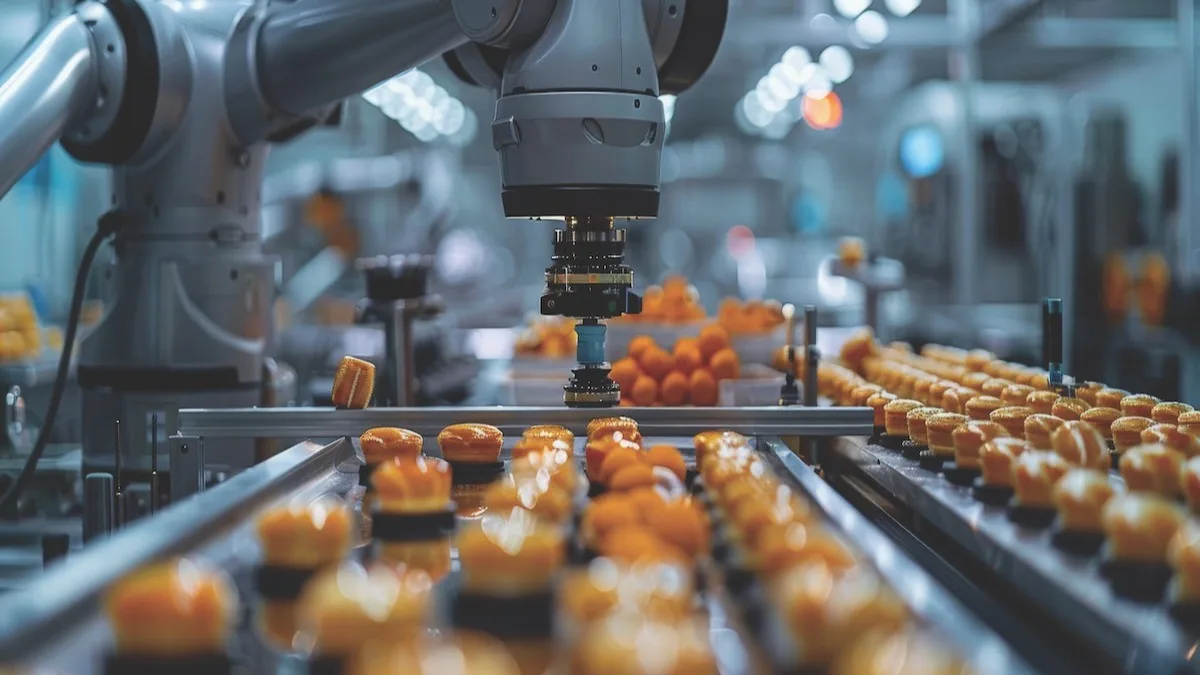
A plant manager I know spent eight months evaluating AI forecasting tools last year.
Demos. Proposals. Reference calls. A pilot that ran for way too long without value. A final recommendation to leadership with a business case attached.
The tool was good. The business case was solid. Leadership approved it.
And then nothing happened.
Not because anyone decided against it. Just because implementation required time and internal resources that nobody could actually free up. The operations team was running a plant. The IT team had three other projects ahead of it. The consultant who'd helped scope the project had moved on to the next engagement.
The software sat there. Licensed. Unused. For five months.
He told me about it almost as a joke. Except it wasn't really funny. That's just what AI adoption looks like in food manufacturing right now. And it happens more than anyone talks about.
The gap nobody budgets for
The conversation around AI in food manufacturing tends to focus on two things: the technology and the business case. What the tool does, what it costs, what the return looks like on paper.
What it consistently underestimates is the implementation gap. The distance between a licensed piece of software and a working solution that your team actually uses, that's integrated into your real workflows, that someone is responsible for maintaining and improving over time.
That gap is where most AI projects in food manufacturing die. Not in the evaluation. Not in the approval. After the contract is signed, when the actual work of making it run starts competing with every other operational priority in the building.
The old model for closing that gap was the consultant. Bring in an expert, have them learn the operation, build a roadmap, hand it over. The problem with that model is the handover. The moment the consultant leaves, the implementation momentum goes with them. What's left is a document describing what should happen and a team that still has a plant to run.
"The roadmap was excellent. Genuinely useful. We just never had the six weeks it would have taken to follow it. Something more urgent always came up first."
Something more urgent always comes up first. In food manufacturing, something more urgent always comes up first. That's not a management failure. That's just the reality of running a production operation where the floor doesn't stop because a software project needs attention.
Why the software-only model has the same problem
The alternative to hiring a consultant was buying software and figuring it out internally. And for operations with a dedicated IT function and a change management process, that can work.
Most food manufacturers don't have that. They have operations teams running plants and an IT setup built around keeping existing systems running, not implementing new ones. Handing a food manufacturer an AI forecasting tool and documentation is roughly equivalent to handing someone a professional kitchen and a recipe book and telling them dinner is covered.
The ingredients are there. The capability is theoretical. The expertise to actually make it work on a timeline that matters is not.
This is the structural problem with how AI has been sold to food manufacturers. The value proposition is real. The delivery model has been broken. And the manufacturers who've tried and stalled aren't wrong to be skeptical the next time someone comes in with a demo and a contract.
What fractional AI operations actually means
The model that's starting to work is built around a different assumption.
Instead of handing a manufacturer software or a strategy and expecting them to close the implementation gap themselves, fractional AI operations embeds the capability directly into the operation. A team that comes in, assesses what AI solutions actually make sense for that specific plant, builds them, deploys them, and stays embedded on an ongoing basis to make sure they keep working.
The word fractional matters here. This isn't a full-time hire. It's not a six-figure annual commitment. It's a part-time AI operations function that most food manufacturers couldn't justify building internally but can absolutely access through a model that spreads that expertise across multiple operations.
The other thing that matters is the specificity. Generic AI tools applied to food manufacturing produce generic results. The forecasting logic that works for a consumer electronics supply chain doesn't account for perishable inventory windows, seasonal agricultural supply, or the specific demand patterns of a regional food brand selling into three grocery chains and a foodservice distributor.
Food and beverage manufacturing has its own operational logic. The AI solutions built for it need to reflect that logic or they won't get used. And solutions that don't get used don't generate returns.
"We'd tried two other tools before. Both technically capable. Neither one built around how a food plant actually runs. The gap between what the tool assumed and what our operation looked like was too wide to bridge on our own."
What the first month actually looks like
The operations we work with typically start with two or three targeted solutions. Not a full transformation. Not a ten-module implementation. Two or three specific problems where AI can generate a meaningful return quickly.
Production scheduling is often one of them. The manual planning process in most food plants consumes significant time from people who have better things to do with it. An AI scheduling tool built around the plant's actual constraints, its material availability, its customer commitments, its production capacity, can return hours to the planning team within weeks of going live.
Demand forecasting is another. Not generic forecasting. Forecasting built on that operation's actual sales history, its specific customer mix, its seasonal patterns. The difference between a forecast that's directionally correct and one that's calibrated to the specific reality of a single operation is the difference between a tool the planning team trusts and one they override every week.
The third is usually something specific to that operation. An inventory alert system. A yield tracking tool. A compliance documentation workflow. The point isn't the category. It's that the solution is built for that plant, deployed into that plant's actual workflow, and maintained by people who stay accountable for whether it's working.
Most plants we work with have real, measurable hours returned within the first month. Not theoretical efficiency gains from a vendor case study. Actual time that the operations team gets back every single week.
The manufacturer sitting on the sidelines
There's a version of this that I hear regularly from food manufacturers who've been watching the AI conversation from a distance.
They're not opposed to AI. They're skeptical of the implementation path. They've seen what happened when a peer company invested in a platform that never got properly deployed. They've read the case studies and wondered how much of the result was real and how much was vendor marketing. They're waiting for a model that doesn't require them to become an AI company in order to benefit from one.
That's a reasonable position. And for a long time, there wasn't a great answer to it.
Fractional AI operations is that answer. Not because the technology changed. Because the delivery model finally caught up to the reality of how food manufacturing actually works.
The plant doesn't stop running while you implement software. The implementation has to fit around the plant, not the other way around. A team that stays embedded, stays accountable, and already knows how food and beverage operations work is the only model that consistently closes the gap between licensed and actually running.
That's what we built at Tracktile. And it's what's working.
Want to understand what this could look like for your specific operation?
Book a discovery call at book a demo. We'll tell you honestly what makes sense and what doesn't.
Related Articles

Difficulties of Implementing Manufacturing Software
Integrating new software into a manufacturing process may pose initial challenges, but these obstacles are a positive sign of growth and point towards a promising future.
The AI Isn't the Problem. Your Data Is.
There's a conversation happening in food manufacturing right now and it goes something like this. AI is coming. It's going to transform production planning.
Unique Challenges in Food Manufacturing, can Automation Help?
Explore how automation enhances food manufacturing, optimizing inventory, boosting quality control, increasing production, and improving packaging.
Ready to modernize your manufacturing?
See how Tracktile can streamline your operations with a personalized demo.
Book a Demo