The Software Gap Nobody Warned About
There's a moment that happens in almost every growing food manufacturing operation. It's not dramatic. It doesn't announce itself.

There's a moment that happens in almost every growing food manufacturing operation.
It's not dramatic. It doesn't announce itself. It just arrives one day and suddenly the systems that were holding everything together start showing their limits in ways that are hard to ignore.
The spreadsheet that tracked inventory fine at two SKUs starts breaking down at twenty. The manual lot tracking process that worked when one person managed it starts producing errors when three people are updating it across two shifts. The compliance binder that passed the last audit requires two weeks of intensive preparation to get ready for the next one.
The operation hasn't done anything wrong. It's just grown past what its systems were built to handle.
And then someone looks into the software options and comes back with a number that ends in six figures, a timeline that starts in months, and a requirements list that includes an IT infrastructure the operation doesn't have.
So they go back to the spreadsheet.
That's the gap. And most growing food manufacturers spend years in it.
Why the gap exists
The food manufacturing software market has historically been built around two very different customers.
On one end, there's the enterprise. The large-scale processor with a dedicated IT team, a significant technology budget, and the internal resources to manage a complex implementation. ERP systems were built for this customer. They're powerful, comprehensive, and completely unsuited to a plant that needs to be up and running in weeks rather than years.
On the other end, there's the very small operation. The producer who's managing everything manually, running on spreadsheets and institutional knowledge, and for whom the administrative burden of a structured software system outweighs the benefit at their current scale.
In between those two is where most growing food manufacturers actually sit. Too complex for spreadsheets. Too small for enterprise software. Managing real traceability requirements, real compliance obligations, real inventory complexity, with a team that doesn't have the bandwidth to absorb a major technology implementation on top of running the plant.
That middle ground has been underserved for a long time. Not because the need isn't real. Because the market focused on the customers with the biggest budgets and assumed everyone else would figure it out.
"We looked at three different systems. Two of them were clearly built for companies ten times our size. The third was basically a glorified spreadsheet with a nicer interface. None of them were built for what we actually are."
None of them were built for what we actually are. That sentence captures the frustration of the gap better than any market analysis could.
What living in the gap actually costs
The gap has a cost that rarely gets calculated directly because it's spread across so many parts of the operation.
There's the inventory cost. Operations managing stock manually or in spreadsheets that drift from physical reality over time carry more safety stock than they need to, write off more product than they should, and make procurement decisions against numbers they can't fully trust. The cost is real and it recurs every single week.
There's the compliance cost. Smaller operations that can't justify a dedicated compliance management system absorb audit preparation as an operational event rather than a continuous background function. Two to three weeks of intensive work, twice a year, consuming QA capacity that should be going toward actual food safety improvement. The cost is in hours, in stress, and in the risk that carries through every day the documentation isn't current.
There's the traceability cost. When a batch trace requires cross-referencing records maintained in different formats by different people, the answer to a retailer or regulator request takes hours rather than minutes. In an environment where traceability is increasingly a condition of market access, that lag has direct commercial consequences.
And then there's the cost that's hardest to quantify. The evenings spent catching up on work that a proper system would have handled automatically. The decisions made on incomplete information because the data isn't accessible in the moment it's needed. The problems that compound because they weren't flagged early enough.
None of these are the result of poor management. They're the predictable outcome of an operation that's outgrown its systems and hasn't yet found a replacement that fits.
The same gap shows up in the inbox
Here's something worth noting, because it tends to get overlooked in conversations about operations software.
The gap between manual processes and enterprise systems doesn't only show up on the production floor. It shows up in the back office too.
For most mid-sized food manufacturers, the AP and AR function runs on email. Invoices arrive. Purchase orders come in. Bills of lading, shipping documents, approval requests, payment confirmations, all of it flowing through an inbox that was never designed to manage financial document workflows.
The result is the same pattern as the floor. Documents get buried. Deadlines get missed. Someone spends 25 hours a month manually sorting through email threads to find the document that was there somewhere. 23% of invoices get processed late not because anyone was careless but because the system for managing them was never a system at all.
"The floor was getting more organised. The inbox was still chaos. Same company, same size, same problem showing up in a different place."
Same company, same size, same problem showing up in a different place. That's the pattern.
Tracktile Inbox was built to close that gap in the back office the same way Tracktile closes it on the floor. It connects to your existing Gmail, Outlook, or IMAP account in two clicks. It automatically detects and extracts financial documents the moment they arrive, links approvals and conversations to the right transactions, and organises everything into a single dashboard so the AP and AR team stops living in search and starts managing by exception.
No forwarding rules. No new email system. No implementation project. It works with the inbox your team is already using and makes it function the way it should have been functioning all along.
What the right fit actually looks like
The operations that successfully close the gap share a few characteristics worth noting.
They didn't try to implement everything at once. They started with the highest-cost problem, the one generating the most daily friction, and solved it completely before moving to the next one. Inventory visibility. Or batch traceability. Or compliance documentation. One thing, done properly, generating a return before the next thing begins.
They chose software built for their size. Not scaled-down enterprise software with features removed. Software designed from the start for the operational reality of a mid-sized food manufacturer. The difference shows up in implementation time, in how the workflows map to actual plant processes, and in how quickly the team adopts it without resistance.
And they stopped treating the gap as a temporary state to be endured until they were big enough for proper software. The gap isn't a phase. It's a place a lot of food manufacturers will operate from for years. The right answer isn't to wait. It's to find tools that were actually built for it.
The question worth sitting with
What is the gap actually costing your operation right now?
Not in theory. In real hours, real write-offs, real stress before every audit, real evenings spent on problems that a proper system would have caught during the day.
Being a smaller operation doesn't mean living with those costs. It means finding solutions that were built for the size you actually are rather than the size someone else assumed you were.
That's a very different thing.
Ready to see what the right fit looks like for your operation?
Book a demo at book a demo. And if the back office chaos sounds familiar too, Tracktile Inbox is on waitlist now at book a demo.
Related Articles

Difficulties of Implementing Manufacturing Software
Integrating new software into a manufacturing process may pose initial challenges, but these obstacles are a positive sign of growth and point towards a promising future.
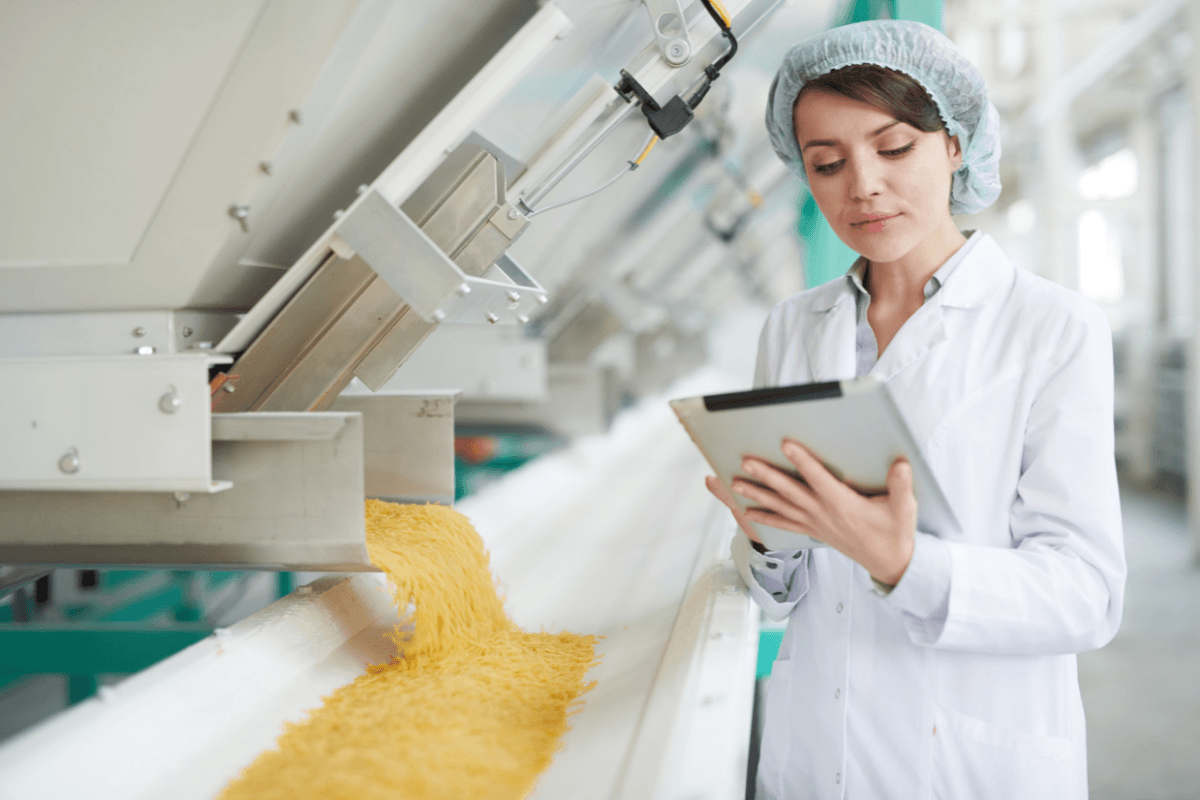
Unique Challenges in Food Manufacturing, can Automation Help?
Explore how automation enhances food manufacturing, optimizing inventory, boosting quality control, increasing production, and improving packaging.

Results of Data Insights in Manufacturing
Boost productivity with data insights for food manufacturing. Analyze, optimize, and streamline processes. Make informed decisions and save time!
Ready to modernize your manufacturing?
See how Tracktile can streamline your operations with a personalized demo.
Book a Demo