What Seafood Processors Mean When They Say Forecasting Doesn't Work Here
I was at a processing operation on the South Shore of Nova Scotia a while back, mid-season, and the owner said something that's stuck with me.
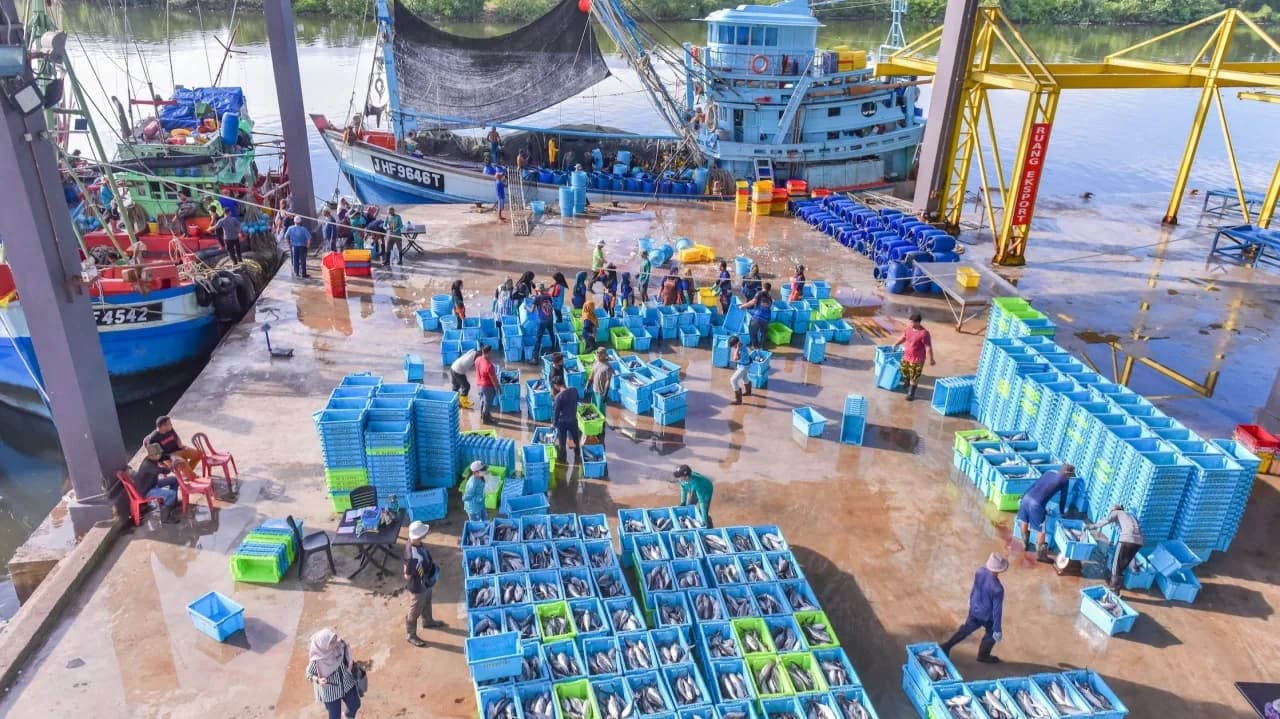
I was at a processing operation on the South Shore of Nova Scotia a while back, mid-season, and the owner said something that's stuck with me. He told me forecasting software was designed for people whose raw material arrives on a schedule.
Hard to argue with. His supply lands when the fleet lands it, in whatever quantity and grade the water gave up that week, minus the days the wind kept everyone tied to the wharf. He'd looked at planning tools twice and walked away both times, and his reasoning held up: you can't build a plan around an input nobody can predict.
Then he told me what actually keeps him awake, and it had nothing to do with volume. He can't schedule labour. He's phoning people the night before, sometimes at six in the morning, and that spring he'd lost two experienced graders to a competitor who could tell someone on Thursday whether they were working Monday. In a region where skilled processing labour is the scarcest resource going, losing graders is a slow structural failure with a two or three year fuse on it.
So he'd concluded that forecasting was impossible for his business, while carrying a cost that better forward planning would have addressed directly. Those two facts sat next to each other in his operation for years and never got connected.
The variable everyone points at
When someone in seafood tells me forecasting doesn't work in this sector, they almost always mean supply. And they're mostly right. Landings are driven by biology, weather, quota decisions, and fleet behaviour, and no model is going to tell you what tomorrow's haul looks like with any precision worth acting on.
Supply is one of roughly six things you'd want a forward view on, though. Off the top of my head: labour hours required, cold storage capacity, packaging and case inventory, freight bookings, recovery rate by species and grade, and customer commitments against available product.
All of those are more predictable than the catch. Several of them aren't predictions in the first place, they're arithmetic on information you already have sitting in your building.
"I always said I couldn't forecast. What I meant was I couldn't forecast the fish, and it turns out that was maybe a fifth of what I actually needed to know."
Most of what you need to know has already happened
Here's what struck me walking that plant. By the time product reaches the dock, a good chunk of the uncertainty has already resolved itself.
He knew what was on the water, because he had purchase confirmations from harvesters. He knew roughly what was sitting in his holding tanks. He had trucks in transit with weights on the manifest. He had cold storage counts, although those ran two days behind because somebody walked the freezer with a clipboard on Wednesdays.
Three days of forward position is enough to tell you how many grading hours you'll need, whether you're going to run short on totes, and whether you should be calling in second shift or standing them down. That's not a prediction about the ocean. It's just visibility on commitments that already exist.
The information was all there. It lived in four different systems and one filing cabinet, and assembling it into a single view took someone the better part of an afternoon, which meant nobody did it unless something had already gone wrong.
Across every sector we work in, seafood is where I see this most consistently. There's no shortage of data. What's missing is consolidation, in an operation where the tempo is far too fast for anyone to consolidate by hand.
Recovery rate is where the money moves
If you want a forecasting target in seafood that pays for itself quickly, look at yield before you look at volume.
Recovery moves with species, size grade, season, condition on arrival, and to be honest with which crew is on the line that morning. Any lobster processor can tell you meat yield differs meaningfully between hard shell and soft. A groundfish operation knows fillet recovery drifts across the season. Most operators carry a rough figure in their head and use it for costing, because that's what's available.
A rough figure works fine for a quote and falls apart as a planning input. If you're pricing a customer at 8 percent margin on a recovery assumption that's two points optimistic for the grade you're actually running, your real margin is somewhere well south of that, and you won't discover it until the month closes. By then you've sold three more loads on the same number.
Yield is measurable. It's recorded lot by lot if you're capturing production properly. And it's one of the few variables in this industry where a model has a rich history to work from: species, grade, source, season, line, crew, and outturn. That's a proper dataset. Most plants have it and use almost none of it.
"We were costing everything off one recovery number for the whole species. When we split it out by grade and month it wasn't even close, and two of our better-looking accounts were basically break-even."
The records you're already keeping for CFIA
Worth remembering how much record-keeping Canadian seafood exporters are carrying today, because the operational argument rests on what's already in force rather than on what's coming.
The Safe Food for Canadians Regulations require lot-level traceability with one-up, one-down capability, records held for two years, and the ability to produce them for CFIA within 24 hours of a request. That's in force now. Every licensed processor I visit is meeting it. Export to the EU and catch documentation and IUU requirements sit on top of that, again today, again being met.
FSMA 204 is a different conversation and it's worth being precise about it, because the timeline has moved and a lot of vendors are still quoting the old date. FDA proposed a 30-month extension in March 2025 and published it in August 2025. In November 2025 Congress directed FDA not to enforce the Food Traceability Rule before July 20, 2028, and FDA has said it will comply. The rule itself is unchanged, the Food Traceability List still includes most seafood, and the requirement is still an electronic sortable spreadsheet of Key Data Elements within 24 hours. What moved is the enforcement date, not the substance.
The reason it matters anyway is that your customers didn't move with it. Walmart, Kroger, and Albertsons have been writing 204-style traceability clauses into supplier agreements, some of them effective regardless of what FDA does federally. Vendor scorecards and chargebacks for malformed traceability data are happening now, in 2026, on contracts that reference a rule nobody is enforcing yet. Federal enforcement is the floor. Retail requirements are the ceiling, and the ceiling arrived first.
So the practical picture for a Canadian processor selling into the US is that you have runway on the regulator and no runway at all on the buyer.
Now look at what's inside a lot record that satisfies an SFCR request. Species, grade, source, quantity, date, transformation history. That's most of a recovery model and a large part of a labour planning input, and it's being captured under regulatory pressure you're already under.
What most operations do with it is file it. The same information gets assembled twice, once for compliance and then again from scratch whenever somebody needs it for an operational decision. That's a strange spot for an entire industry to occupy.
"Our traceability was solid. Our planning was guesswork. Same information both times, and it never once occurred to us that those were the same problem."
What I'd do first if I ran a processing plant
Three things, none of which require buying anything.
Pull your last two seasons of recovery data by species and grade rather than in aggregate, and hold it up against the assumption in your costing. If the gap is more than a point, go find out which accounts you priced on the wrong figure.
Then work out how far forward you can honestly see on inbound product. Purchase confirmations, harvester commitments, in-transit weights, holding inventory. My guess is somewhere between two and five days, and my guess is nobody in your building has ever measured it, because no report produces that number.
Last one. Ask your line supervisor how much notice they'd need to staff a shift properly, then compare that against how much notice they actually get. Whatever the gap turns out to be, that's what you're paying in overtime, in unplanned downtime, and in the graders who leave for an operation that can hand them a schedule.
Is it really the ocean, or is it the afternoon it takes to find out what you already have?
That South Shore processor is doing well, and he's still right that nobody can forecast a haul. But he runs a three-day forward labour plan now, built off inbound commitments and cold storage position, and last time we spoke he'd stopped phoning people the night before. He described the change as the difference between running a plant and reacting to one.
Seafood is where I hear the most fatalism about planning of anywhere in food manufacturing, and I understand why it took root. My worry is that fatalism about supply spreads, and starts getting applied to variables that were never unpredictable to begin with.
Book a demo at book a demo. If you're a processor, bring two seasons of recovery data broken out by species and grade. We'll run it against your costing assumptions live on the call and show you where the pricing gap sits. That analysis is yours to keep regardless of what you decide to do next.
Related Articles

The Moment Production Planning Stops Being A Guess
At some point, every plant manager has that Monday morning moment: "We need to adjust the schedule." It doesn't sound like a big ask.

The Spike You Saw Coming But Still Weren't Ready For
Every year, around the same time, the same thing happens. Demand spikes. The plant scrambles. Emergency or short orders go out.
Manufacturing analytics and understanding the metrics that matter
Explore how food and beverage manufacturers can harness data analytics to track the metrics that matter, optimize operations, and drive profitability.
Ready to modernize your manufacturing?
See how Tracktile can streamline your operations with a personalized demo.
Book a demo